



E-commerce is on the brink of a new revolution, and its name is agentic commerce. In 2026, the way consumers discover, research, and purchase products is being radically transformed by artificial intelligence. At the heart of this shift lies the integration of e-commerce platforms with AI assistants, and Shopify, an industry giant, is leading the way. The company recently announced an integration that allows merchants to sell products directly through conversations on platforms like ChatGPT, Google Gemini, and Microsoft Copilot.
This shift is not merely a new feature; it is a fundamental transformation of the customer journey. Purchasing, once a multi-click, multi-tab process, can now happen within a single, fluid conversation. For e-commerce store owners and marketing agencies, understanding this new frontier is no longer optional; it is a prerequisite for staying competitive. This post explores Shopify’s AI checkout integration in depth, detailing how it works, the costs involved, the opportunities it unlocks, and the challenges it presents.
What Is AI Checkout?
AI checkout, also known as conversational or agentic commerce, represents the natural evolution of e-commerce. Instead of browsing a website, navigating categories, and adding items to a cart, consumers simply express their needs to an AI assistant. The agent then does the heavy lifting: researching products, comparing options, reading reviews, and ultimately presenting a recommendation alongside an instant purchase option.
“Agentic AI will first change the top of the shopping journey,” said Kaare Wesnaes, head of innovation at Ogilvy North America. “The moment someone decides they need something, they won’t open ten tabs or read 20 reviews anymore. They will ask an agent to understand their needs, scan the market, factor in price, delivery, sustainability, return policies, and past purchases, and deliver a recommendation they can trust.”
This approach eliminates friction from the buying journey, making it faster, more personal, and exceptionally convenient. For retailers, this represents an opportunity to capture high-intent sales the exact moment consumer desire emerges. Shopify’s integration with AI platforms like ChatGPT turns this vision into reality for millions of merchants.
How Does Shopify’s AI Integration Work?
Shopify’s integration with AI assistants is designed to be as seamless as possible for both merchants and consumers. The partnership, particularly with OpenAI, the creator of ChatGPT, establishes a new sales channel that connects directly to your existing Shopify store.
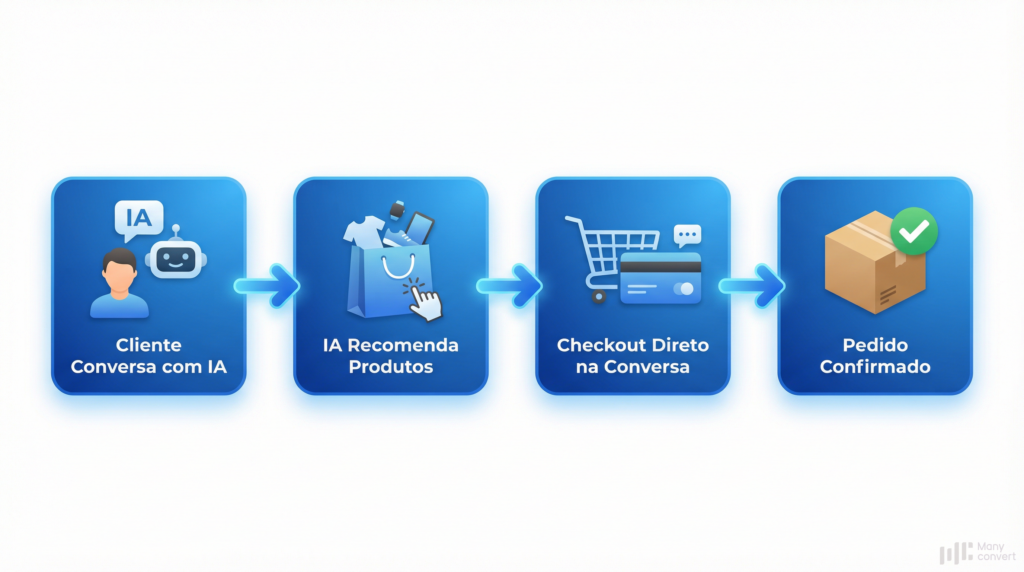
The process generally follows these steps:
- Customer Query: The customer starts a conversation with an AI assistant (e.g., ChatGPT) and describes what they are looking for. Example: “I need durable, waterproof running shoes for under US$ 800.”
- AI Analysis and Discovery: The AI assistant analyzes the query and searches real-time product catalogs of Shopify merchants who have enabled the integration. The AI weighs factors like product description, price, reviews, and other metadata to find the best matches.
- Recommendation and Presentation: The AI displays one or more recommendations directly in the chat interface, complete with images, descriptions, and pricing.
- Instant Checkout: If the customer decides to buy, they can click a “Buy Now” button inside the chat. The transaction is processed using Shop Pay, Shopify’s native checkout system, delivering a secure, one-click purchasing experience for millions of existing users.
- Order Processing: The order flows directly into the merchant’s Shopify admin dashboard, just like a standard website purchase. The merchant retains full control over fulfillment, shipping, and, crucially, customer data.
This native integration means there is no need for complex custom development. The system syncs with your Shopify inventory in real time, ensuring products recommended by the AI are always in stock.
Costs and Fees: The Price of Innovation
The convenience of AI checkout comes with a new fee structure. OpenAI was the first to announce its pricing model, and merchants must understand it thoroughly to evaluate the profitability of this emerging channel.
Currently, OpenAI charges a 4% fee on the total order value of each sale completed via ChatGPT’s Instant Checkout feature. This fee is in addition to standard Shopify transaction fees. As a result, the total cost per AI sale can reach approximately 7% or more, depending on the merchant’s Shopify plan and whether they use a third-party payment processor.
| Fee Type | Approximate Cost | Description |
|---|---|---|
| Shopify Transaction Fee | 2.9% + US$ 0.30 | Standard fee for online payment processing. |
| AI Fee (OpenAI) | 4% | Fee charged by OpenAI on sales via ChatGPT. |
| Third-Party Payment Processor Fee | 2% (additional) | Extra fee charged by Shopify if the merchant does not use Shopify Payments. |
Notably, for now, other AI platforms like Google Gemini and Microsoft Copilot have not announced additional transaction fees for sales generated through their assistants. This creates an interesting competitive landscape where merchants may need to evaluate sales volume and profitability across each AI platform independently.
Opportunities for E-Commerce in 2026
Despite the costs, agentic commerce unlocks significant opportunities for e-commerce brands willing to innovate.
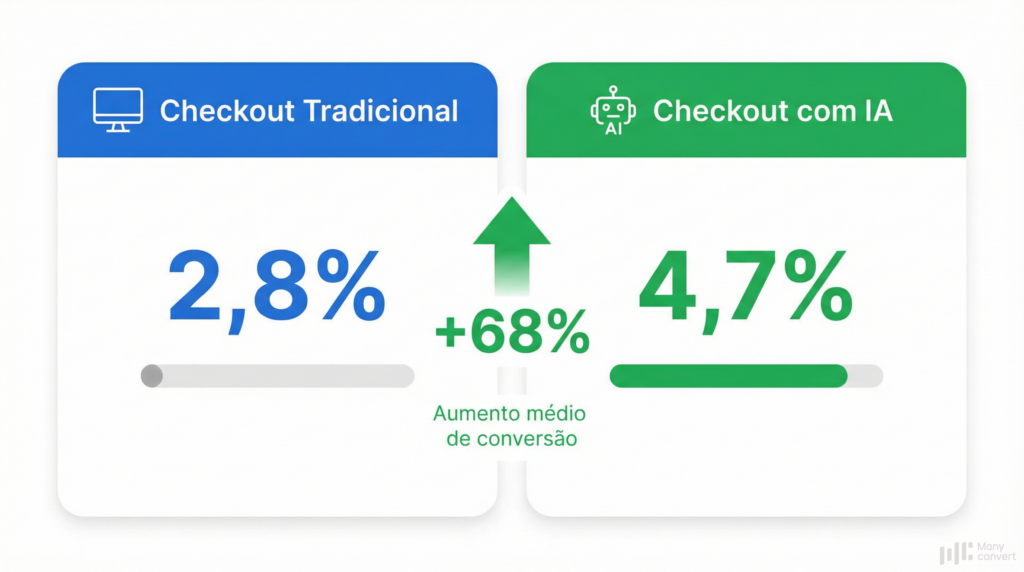
- Access to High-Intent Shoppers: AI acts as a filter, connecting your store with customers who already know what they want. This results in top-tier leads and potentially higher conversion rates.
- Organic, Relevant Discovery: Unlike paid ads, discovery across AI platforms is driven by relevance. This means your product quality and data precision matter more than your marketing budget. Optimizing your store for Answer Engine Optimization (AEO) will become an essential new marketing discipline.
- Reduced Buying Friction: By eliminating the need to browse an external website, AI checkout captures impulse buys and curbs cart abandonment rates, one of traditional e-commerce’s biggest pain points.
- Ownership of Customer Relationships: One of the greatest advantages of Shopify’s integration is that the seller remains the Merchant of Record. You retain ownership of customer data, enabling you to build long-term relationships and execute retention and remarketing campaigns.
Strategies to Optimize Your Store for AI Checkouts
Winning in agentic commerce requires more than just enabling the integration. You must optimize your store to be discovered and recommended by AI algorithms. Answer Engine Optimization (AEO) is the new frontier in digital marketing, demanding a distinct approach from traditional SEO.
1. Product Data Optimization
The quality of your product data is the single most critical factor for success on AI platforms. AI assistants do not “see” your catalog the way humans do; they rely on structured metadata and clear descriptions to understand what you sell. This means every product in your catalog needs descriptive, specific titles, comprehensive descriptions outlining features, benefits, materials, dimensions, and use cases, high-resolution images with descriptive alt text, and precise information on pricing, availability, and shipping options.
Products with generic descriptions like “Blue T-Shirt” are far less likely to be recommended than those with rich descriptions like “Men’s Navy Blue T-Shirt, 100% Organic Cotton, Short Sleeve, Crew Neck, Size L, Ideal for Casual Wear”. AI requires context to accurately map customer intent to your inventory.
2. Review and Reputation Management
AI agents are designed to prioritize products with glowing reviews and strong brand reputations. Active customer review management is therefore paramount. Encourage satisfied buyers to leave in-depth reviews, respond promptly and professionally to all feedback (both positive and negative), and resolve support issues proactively to prevent poor ratings. A product with a 4.8-star rating and 200 reviews holds a major advantage over an identical item with a 4.2-star rating and 10 reviews, even if the latter costs less.
3. Clear and Transparent Policies
Transparency is crucial for earning trust from both shoppers and AI algorithms. Ensure your shipping, return, and warranty policies are clear, easy to find, and fair. AI agents frequently evaluate these policies when formulating recommendations. A customer-friendly return policy and competitive delivery windows can be the deciding factor that leads an AI to suggest your product over a competitor’s.
Use Cases: Who Is Winning with AI Checkouts?
While the integration is relatively new, clear patterns are already emerging regarding which product categories and niches see the strongest traction on AI platforms.
Highly Specific Niche Products: Items catering to precise requirements, such as specialized sporting goods, niche hobby supplies, or wellness products with unique attributes, perform remarkably well. AI excels at matching complex user needs with highly specialized products.
Products with Strong Brand Differentiation: Brands that have invested in building a recognizable reputation and distinct value proposition are seeing strong returns. AI naturally highlights trusted brands when product quality is paramount to the shopper.
Replenishment and Recurring Purchases: Items customers buy regularly, such as supplements, skincare essentials, or household staples, are a natural fit for agentic commerce. Shoppers can simply prompt the AI assistant: “Reorder the shampoo I bought last month,” completing the transaction in seconds.
Challenges and Considerations
Like any emerging technology, AI commerce brings challenges that teams must consider:
- Product Data Quality: AI relies entirely on the data you feed it. Product titles, descriptions, images, and metadata must be detailed, accurate, and optimized for algorithmic consumption. Stores with sparse or poorly structured data will simply be bypassed by AI engines.
- Reliance on Third-Party Platforms: Selling via AI platforms means relying on external algorithms and rules. Sudden updates to recommendation engines or pricing structures can directly impact sales volume.
- Increased Competition: The frictionless access that benefits your store benefits your competitors just as much. Brand standing, product quality, and competitive pricing will be key differentiators.
- Learning Curve: Mastering AEO is a nascent discipline that many marketing teams are just beginning to navigate. It requires new workflows, experimentation, and continuous optimization.
How ManyConvert Helps Your E-Commerce Brand Win in the AI Era
Transitioning to agentic commerce may seem daunting, but with the right tech stack and strategy, it presents an unprecedented growth opportunity. ManyConvert is at the forefront of this shift, delivering solutions that future-proof your e-commerce operations.
Our AI-powered WhatsApp engagement and customer support platform can help your store stand out in several ways:
- Automated Post-Purchase Support: After a transaction occurs via AI, the customer relationship is just getting started. Our AI chatbots handle post-purchase inquiries, answer order status questions, manage returns, and keep buyers engaged, freeing your team to focus on strategic initiatives.
- Personalization at Scale: ManyConvert empowers you to harness customer data captured across all channels, including AI commerce, to build hyper-personalized marketing and reorder flows that drive repeat purchases and maximize customer lifetime value (LTV).
The future of e-commerce is conversational. Shopify’s AI checkout integration is only the beginning. Schedule a ManyConvert demo today and see how we can help your business not only compete, but thrive in the era of agentic commerce.