


Revolution in Image Creation: How ChatGPT 4o’s New Update Transforms E-Commerce
In the competitive world of e-commerce, product image quality can be the deciding factor between a completed sale and an abandoned cart. Until recently, online retailers faced a dilemma: invest heavily in professional photography or settle for amateur images that didn’t do their products justice.
On March 25, 2025, OpenAI launched a breakthrough update for ChatGPT that is completely changing this landscape. The new GPT-4o image generation feature represents an unprecedented technological leap, giving digital entrepreneurs a powerful tool to create professional product visuals without expensive equipment or specialized photography skills.
In this article, we’ll explore this new update in detail, demonstrate how it works in practice with a real e-commerce example, and discuss the implications of this technology for the future of digital retail.
The New Era of Image Generation with GPT-4o
The March 25, 2025 update marks the first major enhancement to ChatGPT’s image generation capabilities in over a year. Unlike the previous version that used DALL-E 3, ChatGPT now directly leverages the GPT-4o model to natively create and edit images.
According to OpenAI CEO Sam Altman during a livestream on launch day, GPT-4o with image output “thinks” a bit longer than the previous model to produce what the company describes as “more accurate and detailed images.” Additionally, the new model can edit existing images, including photos of people, transforming them or “inpainting” details like foreground and background objects.
Key GPT-4o Improvements in Image Generation:
1. Greater precision and fidelity: The new model produces significantly more realistic and accurate images.
2. Better comprehension of complex instructions: GPT-4o follows detailed prompts far more accurately than its predecessor.
3. Superior text rendering: One of the biggest breakthroughs is the ability to generate legible and coherent in-image text.
4. Advanced image editing: The capability to edit existing images with natural and convincing results.
5. Background removal and transparency: Effortlessly isolate objects and generate transparent PNGs.
6. Stylistic consistency: Stronger capability to maintain a consistent visual style across multiple images.
Initially available only to Pro tier subscribers ($200/month), OpenAI quickly expanded access to Plus and free ChatGPT users, democratizing access to this transformative technology.
A Practical Case: Transforming Product Visualization for E-Commerce
To showcase the potential of this new technology, we conducted a practical test with a corporate apparel e-commerce business. The goal was to see if ChatGPT 4o could turn a simple product photo into a professional promotional image for Instagram.
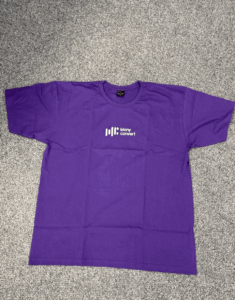
Step 1: Original Product Photo
We started with a basic photo of a purple ManyConvert t-shirt on a neutral background. This is a typical product photo, functional but not particularly eye-catching for marketing:
Step 2: Prompt for ChatGPT
We uploaded the image to ChatGPT 4o with the following prompt:
“I run a corporate apparel e-commerce store. Please use the attached t-shirt image to create an ad visual for Instagram. Feature the t-shirt on a male model around 30 years old attending a corporate event.”
Step 3: Initial Result
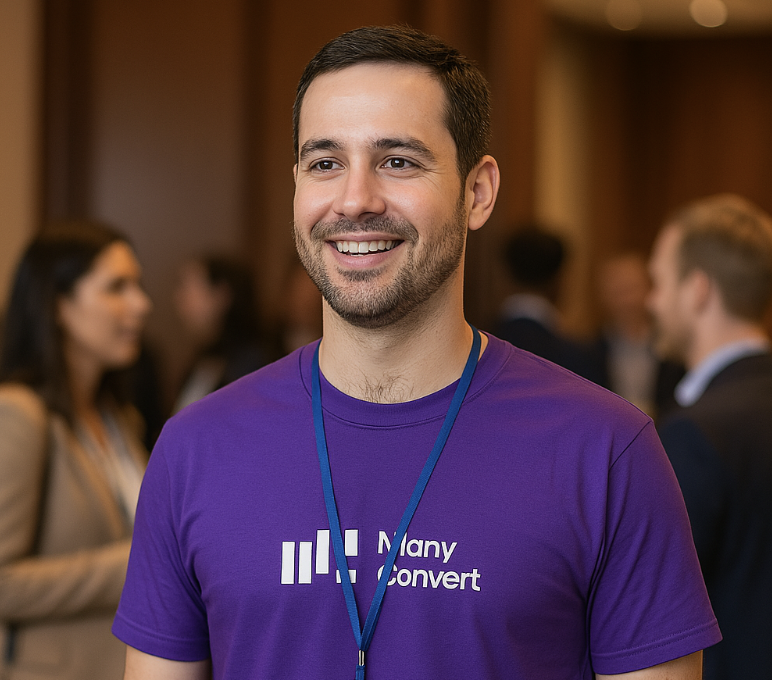
The result was remarkable. Within seconds, ChatGPT generated a realistic image of a man wearing the t-shirt at a corporate event, complete with overlaid promotional copy:
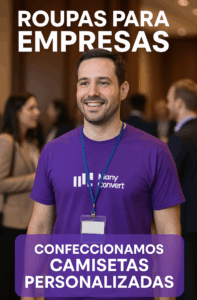
The generated image delivers photographic quality, with natural lighting, an authentic facial expression, and a convincing corporate event setting. The ManyConvert logo was perfectly preserved on the t-shirt, and the model matches the requested age group accurately.
Step 4: Image Refinement
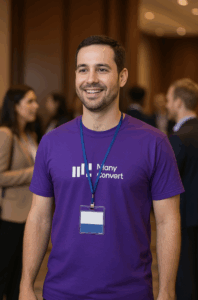
To demonstrate the tool’s flexibility, we asked for a version of the same image without the promotional text:
“Send me the same photo without any written text”
And ChatGPT promptly delivered:
Step 5: Creating a Transparent Background Version
Finally, to maximize the image’s versatility across different marketing assets, we requested a transparent background version:
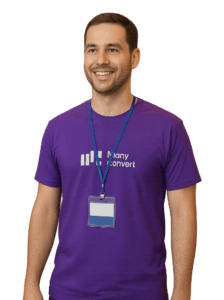
“Send me the same photo with a transparent background”
The result was a clean cutout, ready to be deployed across various promotional materials:
Implications for E-Commerce
This practical demonstration highlights the immense potential of the new ChatGPT update to transform e-commerce operations of all sizes. Let’s break down the key implications:
1. Democratizing Professional Product Photography
The barrier to entry for producing high-quality imagery has dropped dramatically. Small and mid-sized e-commerce stores can now compete visually with major brands without expensive photo studios or professional models.
According to Thomas Lundström, a product photography specialist who extensively tested GPT-4o, “the quality of the generated images is good enough to replace professional photography in many cases, especially for e-commerce brands with limited budgets.”
2. Faster Visual Content Production
The time required to produce promotional assets has shrunk from days or weeks to minutes. This enables:
- Faster product launches
- A/B testing different visual styles
- Agile responses to seasonal trends
- Image customization across multiple channels and target audiences
3. Visual Consistency Across Product Lines
Maintaining visual consistency across hundreds or thousands of SKUs has always been a challenge for e-commerce brands. With GPT-4o, merchants can produce images with matching style, lighting, and composition across an entire catalog, reinforcing brand identity.
4. Significant Cost Reduction
E-commerce image production costs can add up quickly:
- Professional photographers: $500-$2,000 per session
- Models: $200-$1,000 per day
- Studio and gear: $300-$500 per day
- Image retouching: $20-$50 per image
With ChatGPT 4o, these overheads drop dramatically, with a Plus subscription priced at just $20/month and capable of generating hundreds of images.
5. Contextual Product Visualization
One of the most significant advantages is presenting products in realistic lifestyle contexts. This is especially valuable for:
- Apparel and accessories displayed on real people
- Furniture and home decor in realistic living spaces
- Professional gear in workplace settings
- Seasonal products in relevant settings
Studies show that contextual lifestyle images can increase conversion rates by up to 30% compared to isolated white-background product shots.
Limitations and Ethical Considerations
Despite these impressive advancements, it is crucial to recognize several limitations and ethical considerations when deploying this technology:
Technical Limitations:
1. Highly specific details: The model can still struggle with overly granular or technical instructions.
2. Multi-image consistency: Maintaining the exact same model or background across multiple distinct images remains challenging.
3. Highly intricate products: Items with complex geometry or unconventional textures may show visual artifacts or distortions.
Ethical Considerations:
1. Consumer transparency: Disclosing when AI-generated imagery is used in advertising and marketing assets is recommended.
2. Diverse and inclusive representation: E-commerce teams must ensure diversity in generated visuals and actively avoid model bias.
3. Intellectual property and image rights: OpenAI has established guidelines to respect artists’ rights, but merchants must stay aware of evolving legal considerations.
OpenAI COO Brad Lightcap stated in an interview with The Wall Street Journal: “We respect artists’ rights in terms of how we do output, and we have policies in place that prevent us from generating images that directly mimic the work of any living artist.”
How to Implement This Technology in Your E-Commerce Store
If you want to leverage GPT-4o to upgrade your e-commerce imagery, here is a step-by-step roadmap:
1. Accessing ChatGPT with GPT-4o
- Create a ChatGPT account (if you don’t already have one)
- For full access to features, consider a Plus subscription ($20/month)
- Ensure you have access to the GPT-4o model (available to all users since April 2025)
2. Preparing Base Images
- Photograph your products with proper lighting
- Use neutral backdrops for cleaner processing
- Capture multiple angles for greater versatility
3. Crafting Effective Prompts
To get optimal results, your prompts should include:
- Clear product specifications
- Intended lifestyle context
- Model characteristics (age, gender, aesthetic)
- Specific environment or setting
- Visual style and creative tone
4. Recommended Workflow
1. Start with a foundational image 2. Refine using follow-up prompts for targeted edits 3. Request aspect ratio variations across channels (Instagram, Facebook, website) 4. Generate clean versions with and without copy 5. Export transparent background versions for maximum design flexibility
5. Integrating with Your Marketing Strategy
- Use generated images for social media posts
- Refresh website banners and featured hero sections
- Produce segmented ad creatives for tailored campaigns
- Build digital catalogs with contextual lifestyle product views
The Future of Product Visualization in E-Commerce
The ChatGPT 4o update is just the beginning of a major shift in how products are showcased online. Looking ahead, we can expect:
1. Mass Image Personalization
Imagine serving product imagery featuring models tailored to the browsing shopper’s demographic profile or local setting. Contextual hyper-personalization in product visuals promises to boost conversion rates significantly.
2. Augmented Reality (AR) Integration
Pairing AI-generated imagery with AR tools will deliver richer immersive shopping, like virtual try-ons for fashion or true-to-scale furniture placement in shoppers’ homes.
3. AI-Generated Video
With OpenAI’s Sora release, merchants will soon be able to generate not just static imagery, but full high-definition video demonstrations of products in action, unlocking new frontiers in visual commerce.
4. Visual Shopping Assistants
AI shopping assistants will visually demonstrate how products pair together, recommending complementary cross-sells through real-time rendered visuals.
Conclusion
The new ChatGPT 4o image generation update is a game changer for e-commerce. By democratizing access to professional product imagery, OpenAI is leveling the playing field between emerging brands and enterprise retailers.
As our real-world test proves, the technology is already mature enough to turn a standard product photo into a compelling, studio-quality promotional asset ready for performance marketing campaigns.
For online merchants, the takeaway is clear: adopting this technology is no longer optional, it is a competitive requirement. Brands that leverage GPT-4o to upgrade their visual merchandising will be primed to capture buyer attention in an increasingly crowded, visual-first market.
The AI visual creation revolution is just getting started, and the future of e-commerce has never looked more visually compelling.