



Early 2026 marked an inflection point for global retail. Giants like Walmart, Target, and Etsy are no longer just experimenting with artificial intelligence; they are betting big, integrating their product catalogs directly into the world’s most popular AI platforms, such as ChatGPT, Google Gemini, and Microsoft Copilot. This race to “meet the customer where they are” is redefining e-commerce boundaries and forcing all industry players, from enterprise corporations to small online stores, to rethink their strategies.
Meanwhile, Amazon, in a characteristic move, is choosing a different path, investing heavily in its own AI assistants, such as Rufus and Alexa+. The message is clear: artificial intelligence is no longer just a back-office tool for optimizing logistics; it has become the new storefront, the new sales rep, and potentially the new front door for the consumer. For marketing agencies and e-commerce owners, understanding the strategies, risks, and immense opportunities behind these moves is crucial for survival and growth. This article takes an in-depth look at how major retailers are navigating the era of AI-led commerce and what it means for the rest of us.
The Race to AI Platforms: The Omnipresence Strategy
The logic behind the expansion of retailers like Walmart and Target into third-party AI platforms is simple and powerful: be present where the buyer journey begins. With traffic to retail websites originating from AI platforms growing 758% year over year [1], ignoring this channel is like refusing to build a website in the 2000s.
“What we expect is that consumers will deepen their engagement,” said Katherine Black, partner at Kearney. “More consumers will use it to shop and for more types of purchases. As retailers’ capabilities become more prominent, that will further encourage adoption.”
John Furner, CEO of Walmart, echoed this sentiment at NRF 2026, emphasizing the need to meet consumers where they are. The strategy is clear: instead of forcing the customer to come to your store (physical or online), take the store to the customer, wherever they are. And increasingly, they are in a conversation with an AI assistant.
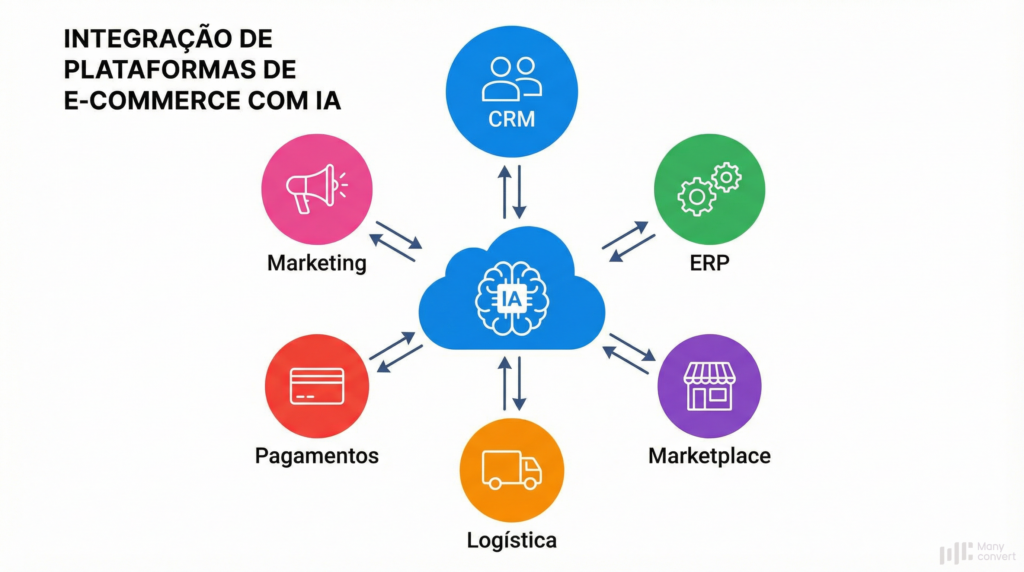
This blanket approach involves integrating product catalogs across multiple AI platforms, ensuring that whether a customer uses ChatGPT, Gemini, or Copilot, products are right there, ready to be recommended and purchased in a single click.
The Retailer Dilemma: Data Risks and Disintermediation
However, this rush toward omnipresence does not come without significant risks. By handing over part of the buying journey to a third-party platform, retailers face a fundamental dilemma balancing visibility and control.
- Loss of Data and Context: When a customer researches, compares, and decides within a platform like ChatGPT, the retailer loses access to a goldmine of behavioral data. The entire “middle of the funnel” (what the customer considered, what they dismissed, and why) happens outside their ecosystem. Nikki Baird from Aptos warns: “The retailer loses a ton of context because it’s outside their domain.”
- Risk of Disintermediation: The biggest fear is becoming a mere fulfillment provider. If interaction, brand experience, and transaction take place on the AI platform, the retailer risks being reduced to a commodity vendor, responsible only for packing and shipping. Kartik Hosanagar, professor at Wharton, warns: “You’re giving away customer interactions, the brand experience, all of it.”
- Weakening Brand Loyalty: Convenience can outweigh loyalty. If the AI agent consistently recommends the product offering the best value, regardless of brand, the customer’s emotional connection to a specific retailer can erode. A study by Deloitte found that 81% of retail executives believe generative AI will weaken brand loyalty by 2027 [2].
The Amazon Fortress: Building Its Own AI Ecosystem
Facing these risks, Amazon’s strategy stands out. Instead of rushing to integrate products into third-party platforms, the e-commerce giant is doubling down on building its own AI ecosystem. With the launch of Rufus, an AI-powered shopping assistant built directly into its app, and the evolution of Alexa+, Amazon aims to keep customers inside its universe.
This “walled garden” approach offers distinct advantages:
- Total Data Control: Amazon retains 100% of buyer journey data, allowing it to continually refine recommendation algorithms and personalize the experience.
- Ownership of the Customer Experience: The brand, interface, and interactions are all controlled by Amazon, strengthening its direct relationship with the consumer.
- Ecosystem Monetization: By becoming the primary destination for AI-assisted shopping, Amazon not only sells its own products, but can also monetize access to its ecosystem for other brands.
This strategy is not without challenges (Amazon must convince customers that its assistants are superior to general-purpose ones like ChatGPT), but it is a powerful bet on the value of control and data ownership.
Opportunities for All E-Commerce Brands
Despite the giants’ dominance, the rise of AI-led commerce creates opportunities for e-commerce brands of all sizes.
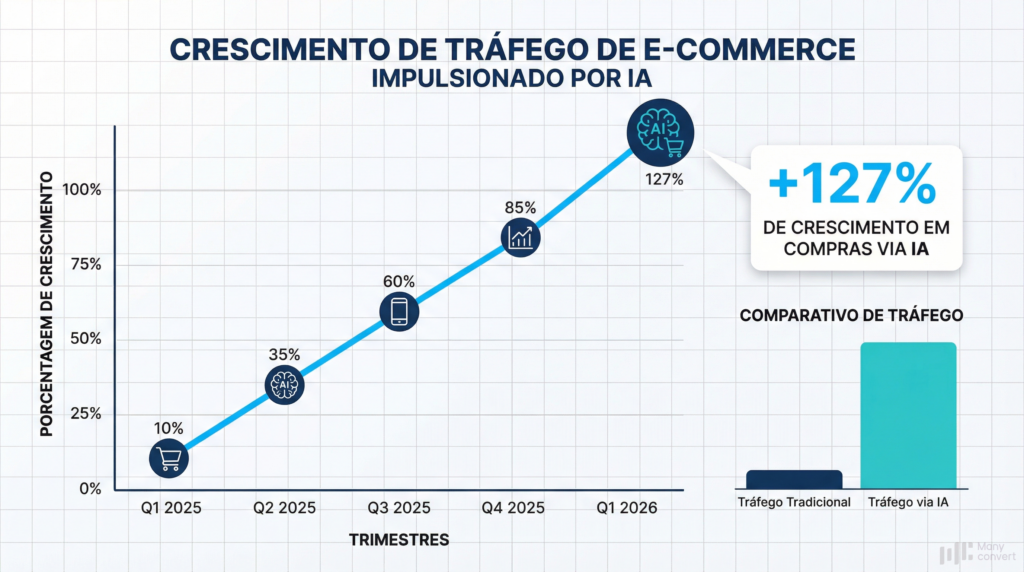
The exponential growth of AI traffic means a new playing field is emerging. For smaller stores and niche brands, Answer Engine Optimization (AEO) can level the playing field. If your product is genuinely the best answer to a customer’s query, AI can recommend it regardless of company size. Product quality and data precision become more critical than ad budgets.
Furthermore, standing out in a sea of AI recommendations amplifies the importance of exceptional customer service and an impeccable post-purchase experience. This is where intelligent automation makes all the difference.
The Role of Speed and Agility
In an environment where consumers expect instant responses and tailored recommendations, implementation speed becomes a critical competitive advantage. Retailers that quickly and efficiently integrate their systems with AI platforms will have a window of opportunity to capture market share before the competition catches up.
Agility also means being prepared to adapt strategies rapidly. AI platforms are constantly evolving, with new features and algorithms rolling out regularly. Retailers that maintain a continuous testing and learning mindset will be best positioned to adapt to changes and seize new opportunities as they emerge.
Lessons from Retail Giants for Mid-Market E-Commerce
While strategies from giants like Walmart and Amazon might seem out of reach for smaller e-commerce businesses, there are valuable takeaways applicable at any scale. The first is the importance of being where the customer is. Even if you don’t have the resources to build your own AI assistant, you can ensure your products are discoverable on existing AI platforms through integrations with platforms like Shopify.
The second lesson is the critical value of data. Regardless of company size, product data quality dictates visibility across AI platforms. Investing in rich descriptions, high-res imagery, and structured metadata is accessible to any online store and yields significant impact.
The third lesson is maintaining control over customer relationships. Even when selling through third-party platforms, find ways to capture customer data and build direct connections. This can be achieved through loyalty programs, post-purchase communication, or value-added content.
Get Ready for the Shift with ManyConvert
Retail is being reshaped by AI. Retail giants have already placed their bets, and ripple effects will touch every corner of the industry. To stay competitive, your e-commerce brand must be agile, efficient, and, above all, intelligent. ManyConvert delivers the tools needed to scale your operations and prepare for the future of commerce.
Our AI automation platform is designed to optimize the customer journey in an AI-driven market:
- 24/7 Customer Support: In an environment where purchases can happen at any moment inside a chat, having always-on customer support is essential. Our AI agents answer queries, resolve tickets, and nurture leads, ensuring you never miss a revenue opportunity.
- Repeat Purchase Optimization: The initial sale is only the beginning. ManyConvert helps automate repeat purchase campaigns and build lasting relationships with customers acquired via AI channels, turning one-off orders into long-term customer lifetime value.
Retail giants are charting the path forward. The question is: are you ready to compete? Discover how ManyConvert empowers your e-commerce store for the AI era. Book a demo today.
References
[1] Adobe Analytics, “2025 Holiday Shopping Report,” 2026. [2] Deloitte, “2026 Retail Industry Global Outlook,” 2026.